Earthquake Insurance
February 23, 2026

Why Earthquake Coverage Matters & Why It’s Not Included in Your Homeowners Policy
Most homeowners are surprised to learn that earthquake damage is not covered under a standard homeowners insurance policy. With small tremors becoming more common across many regions, understanding this gap, and how to close it, is more important than ever.
Even minor earthquakes can cause structural damage, foundation cracks, and costly repairs. Without a separate earthquake policy or endorsement, those expenses fall entirely on the homeowner. The good news is that earthquake coverage is often far more affordable than people expect.
Why Earthquake Coverage Is Separate
Homeowners insurance is designed to protect against common risks like fire, theft, and certain types of weather damage. Earthquakes, however, fall into a category known as catastrophic events, or large‑scale, unpredictable occurrences that can impact many homes at once.
Because of this, insurance carriers separate earthquake coverage into its own policy or endorsement. This allows homeowners to choose the level of protection that fits their needs and budget.
What Earthquake Insurance Covers
A dedicated earthquake policy typically includes:
1. Structural Damage to Your Home – Covers repairs to your home’s foundation, walls, roof, and overall structure if shaking causes cracks, shifting, or collapse.
2. Personal Property – Helps replace belongings damaged during an earthquake — furniture, electronics, appliances, and more.
3. Additional Living Expenses – If your home becomes unsafe or uninhabitable, this coverage helps pay for temporary housing, meals, and other necessary expenses while repairs are made.
4. Detached Structures – Garages, sheds, and other outbuildings can also be included, depending on the policy.
Understanding the Deductible
Earthquake policies use a percentage‑based deductible, often ranging from 2% to 20% of your home’s insured value. Many homeowners are surprised to learn that low‑deductible options exist, including 2.5%, offering meaningful protection without overwhelming out‑of‑pocket costs.
Is Earthquake Coverage Affordable?
In many cases, yes. Premiums vary based on location, home age, construction type, and coverage limits, but policies can be as low as $150–$300 per year. For most families, that’s a small price for peace of mind.
Do You Need Earthquake Insurance?
If you live in an area where tremors are possible, even small ones we have been seeing the midlands of SC, earthquake coverage is worth considering. Damage from ground movement can be expensive, and without a separate policy, homeowners are fully responsible for repairs.
Recent local activity is a reminder that earthquakes don’t have to be large to cause problems. A quick review of your current policy can confirm whether you’re protected or exposed.
Protect Your Home Before the Next Shake
If you’re unsure whether you have earthquake coverage or want to explore your options, I’m here to help. I can review your current policy, provide quotes, and walk you through the coverage in simple, clear terms.
Reach out anytime! Protecting your home is easier (and more affordable) than you might think.
Flood Insurance: What You Need to Know in 2025
July 31, 2025

Flood Insurance: What You Need to Know in 2025
With floods dominating the headlines lately, many homeowners are asking:
“Do I need flood insurance, and how soon does it take effect?”
Whether you’re in a high-risk zone or just want peace of mind, here’s what you should know—especially about the 30-day waiting period that often surprises people.
What Is Flood Insurance?
Flood insurance is a separate policy that covers damage caused by flooding—something not included in standard homeowners or renters insurance. It’s available through:
- The National Flood Insurance Program (NFIP), managed by FEMA
- Private flood insurance providers, which may offer more flexible terms
Flood insurance typically covers:
- Structural damage to your home
- Electrical and plumbing systems
- Appliances, flooring, and built-in furniture
- Foundation walls and staircases
It does not cover:
- Temporary housing
- Vehicles
- Landscaping
- Damage from sewer backups (unless directly caused by flooding
The 30-Day Waiting Period
One of the most important things to understand is the NFIP’s mandatory 30-day waiting period. That means if you buy a policy today, it won’t be active until 31 days later at 12:01 AM.
Why the Wait?
This rule is designed to prevent people from buying coverage only when a storm is imminent. Unfortunately, it also means you can’t wait until the last minute.
Exceptions to the Rule:
- Loan closings: If flood insurance is required for a mortgage, the waiting period may be waived.
- Flood map changes: If your area was recently reclassified as high-risk, you may qualify for immediate coverage if you act quickly.
- Private insurers: Some offer shorter waiting periods (as little as 10 days) or no wait if switching from another policy.
Flooding Can Happen Anywhere
According to FEMA, more than 20% of flood claims come from properties outside high-risk flood zones. Urban development, wildfires, and climate change are increasing flood risks in areas that were once considered safe.
Even a few inches of water can cause tens of thousands of dollars in damage. Without flood insurance, you’re left to cover those costs out of pocket—or rely on limited federal disaster aid, which is not guaranteed.
What You Should Do Now
- Assess your risk: Use FEMA’s Flood Map Service Center or talk to your agent.
- Don’t delay: The 30-day waiting period means you need to act before the next storm is forecasted.
- Compare policies: NFIP is reliable, but private insurers may offer better coverage or faster activation.
- Bundle smart: Some insurers offer discounts when bundling flood with homeowners or auto insurance.
- Ask questions: Your insurance agent can help you understand your options and find the best fit.
Need Help with Flood Insurance?
If you’re unsure whether you need flood insurance—or want to explore your options—reach out today. We’re here to help you stay protected, informed, and prepared.
Call Us! 803-261-4186.
Does my credit affect how much I pay for insurance?
May 16, 2024
Credit can affect your insurance rate in a few different ways. Insurance companies may use your credit score as one of the factors to determine your risk profile as a policyholder. Generally, individuals with higher credit scores are seen as more financially responsible and are therefore considered lower risk to insure. This can result in lower insurance premiums for those with good credit.

On the other hand, individuals with lower credit scores may be seen as higher risk and may be charged higher premiums as a result. Insurers believe that those with lower credit scores are more likely to file insurance claims, leading to increased costs for the insurance company.
It’s important to note that the use of credit scores in insurance pricing varies by state and insurance company, as not all states allow insurers to use credit information when setting rates. Additionally, insurance companies typically consider a variety of factors when determining rates, so your credit score is just one piece of the puzzle.
If you have any additional questions about how your credit rate factors your premium, give us a call.
Protect Your Home: Why Dryer Vent Cleaning is Essential
May 10, 2024
🔥✨ Don’t overlook the importance of dryer vent cleaning in your household routine! 🧺🏠 Neglecting this task can lead to serious consequences, from fire hazards to reduced energy efficiency. Here’s why it’s crucial to prioritize dryer vent maintenance:
🔥 Preventing Fire Hazards: Built-up lint in the vent creates a highly flammable environment, increasing the risk of house fires. Regular cleaning significantly lowers this risk, ensuring your family’s safety.
💡 Improving Energy Efficiency: A clogged vent restricts airflow, causing your dryer to work harder and consume more energy. By keeping the vent clean, you save on utility bills and extend the appliance’s lifespan.
⏳ Extending Appliance Lifespan: Overworking your dryer due to a clogged vent can lead to premature breakdowns. Regular maintenance, including vent cleaning, helps prolong the appliance’s longevity and prevents costly repairs.
🌬️ Safeguarding Indoor Air Quality: A neglected vent can compromise indoor air quality by harboring mold, bacteria, and allergens. Cleaning the vent reduces airborne pollutants, promoting a healthier home environment.
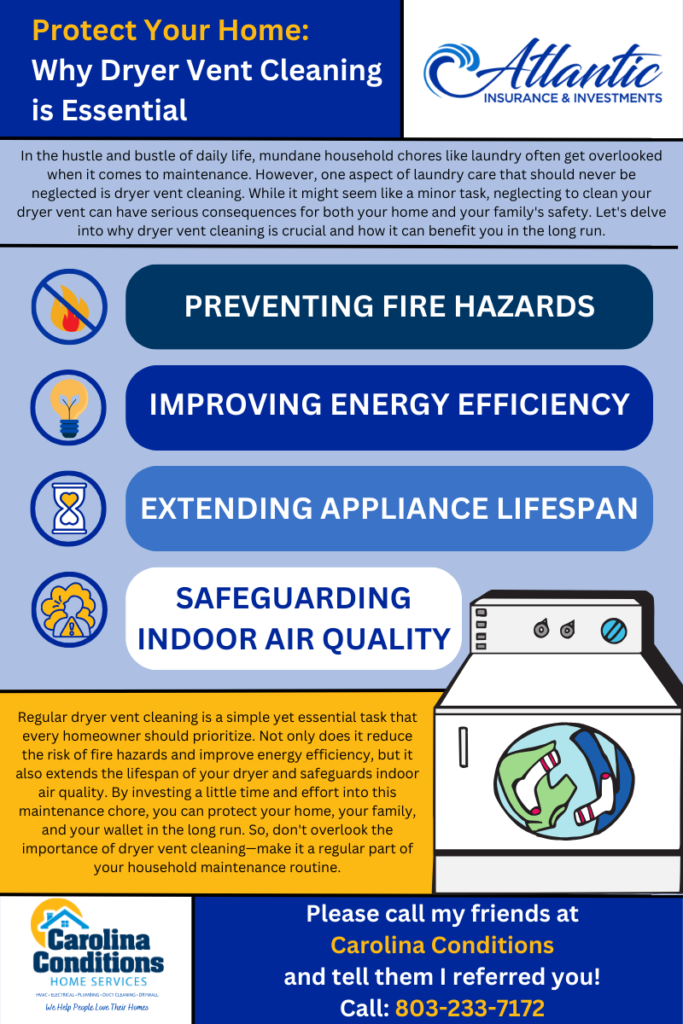
Make dryer vent cleaning a priority! Contact Carolina Conditions and mention my referral for expert service. Protect your home, your family, and your wallet in the long run. 🌟
Preparing Your House for Winter Weather
October 18, 2023
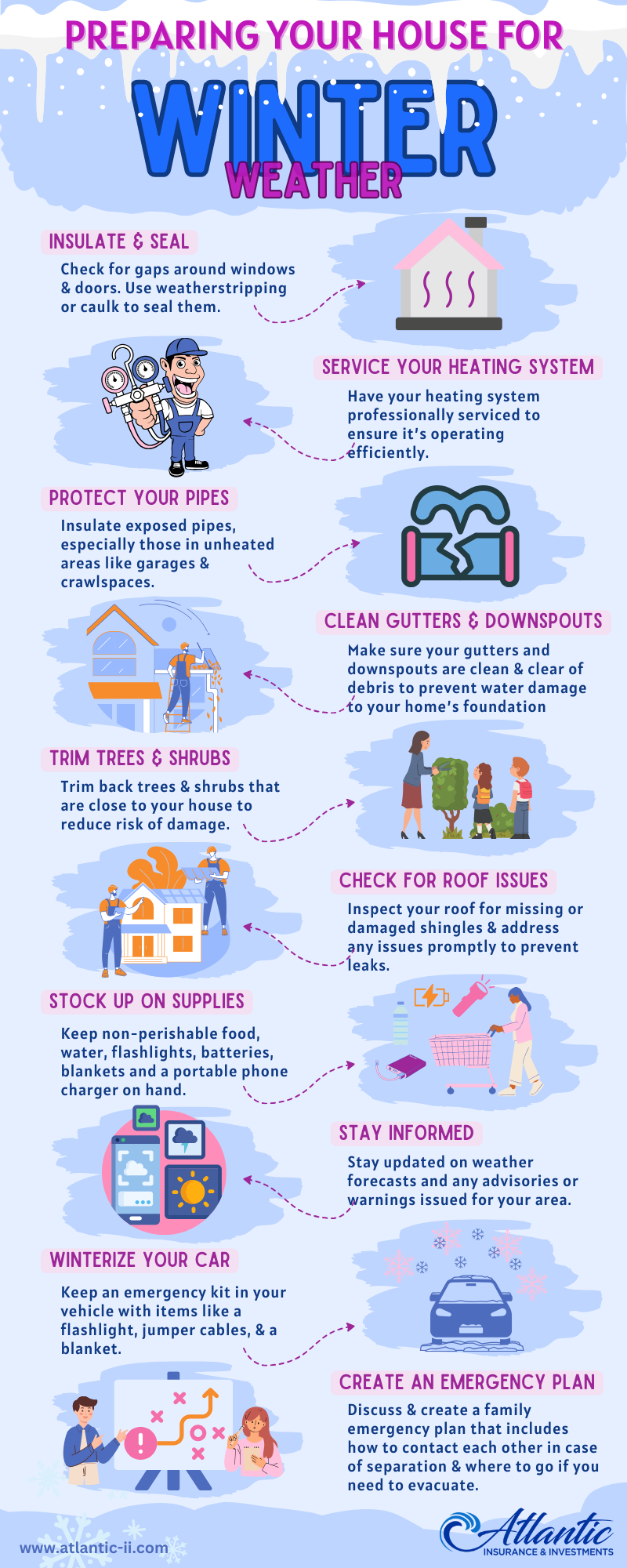
While winter weather may not be as harsh as in other parts of the country, it is essential to be prepared. Taking these steps can help mitigate claims and keep you and your home is cozy and safe throughout the winter season, no matter the weather. Enjoy the milder winter months and stay comfortable in your well-prepared home. Please share any tips you may have in the comments.
Understanding Water Backup and Sump Overflow Endorsements
September 20, 2023
Homeownership is a huge investment, and protecting it from unexpected events is crucial. While standard homeowners insurance policies offer essential coverage, they may not always include protection against water damage caused by sump pump overflows or sewer backups. To safeguard your home comprehensively, it’s very important to understand and consider adding a water backup and sump overflow endorsement to your policy.
What are the Risks: Water damage can wreak havoc on your home and personal belongings. Two common culprits are sump pump overflows and sewer backups.
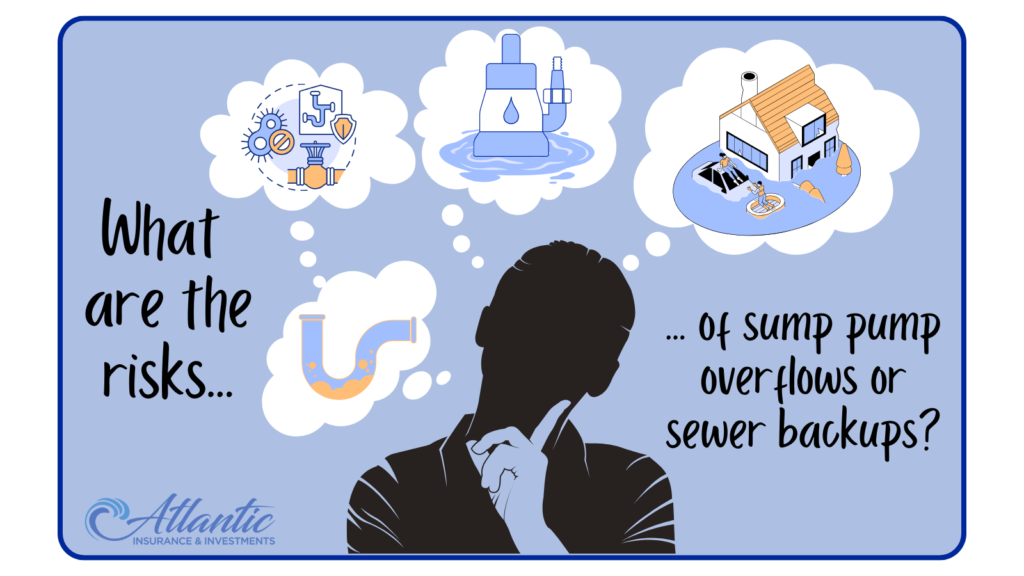
Sump Pump Overflow
First, what is a Sump Pump? A sump pump is a device designed to maintain a dry and moisture-free basement environment. It achieves this by efficiently removing excess water from a designated pit or basin, typically located in the lowest part of your basement where water naturally accumulates.
How Does a Sump Pump Work? The concept is straightforward: when water enters the pit and reaches a certain level, the sump pump springs into action, pumping the water out through a discharge pipe. This simple yet effective mechanism prevents basement flooding and safeguards your home from moisture-related issues like mold and mildew.

Common Causes of Sump Pump Overflow
Understanding why sump pumps may fail is essential for preventing potential issues. Here are some common causes of sump pump overflow:
- Power Outages: When there’s no electricity, your sump pump cannot function properly, leading to water accumulation in your basement.
- Overwhelmed System: Heavy rainfall or rapid snowmelt (not likely in our area) can inundate the pit, exceeding the pump’s capacity.
- Mechanical Issues: Malfunctioning float switches, stuck check valves, or clogs in discharge pipes can disrupt normal pump operations.
The dangers of sump overflow include property damage, mold growth, electrical hazards, fire risk and health concerns.
Sewer Backup
First, what is a Sewer Backup? Sewer backups occur when sewage flows back into your home through drains, toilets, or sinks. This can result from clogged sewer lines, heavy rain, or tree root intrusion. Cleanup and repairs from a sewer backup can be expensive and unsanitary.
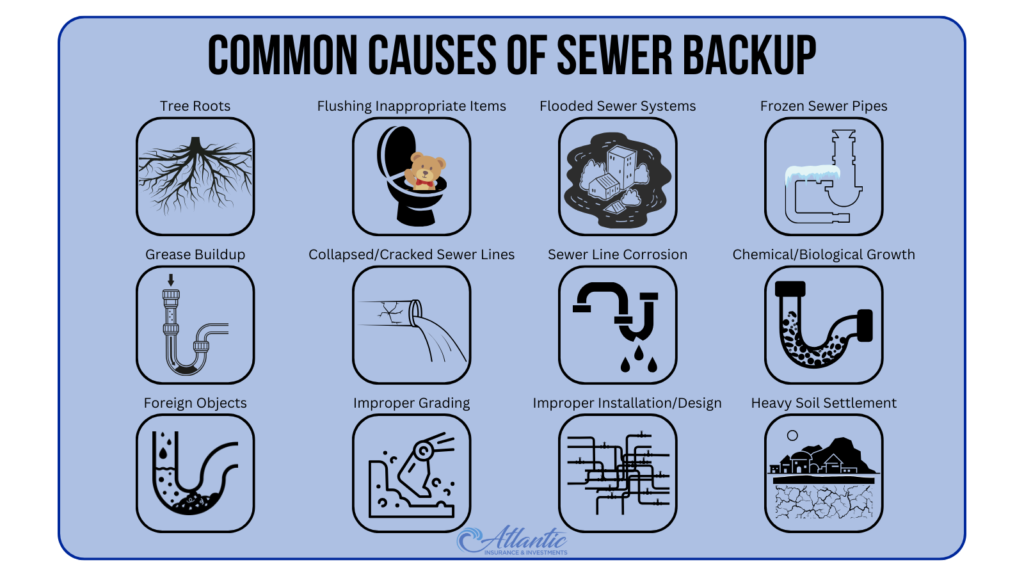
Common causes of Sewer Backup: Sewer backups can be incredibly disruptive and damaging. Understanding the common causes of sewer backups can help homeowners and property managers take preventive measures to avoid these issues. Here are some common causes of sewer backups:
Blockages from tree roots, grease buildup, foreign objects, flushing inappropriate items, collapsed or cracked sewer lines, improper grading, flooded sewer systems, sewer line corrosion, improper installation or design, frozen sewer pipes, chemical and biological growth, and heavy soil settlement.
Preventing sewer backups involves proper maintenance, responsible disposal practices, and, in some cases, professional inspections and repairs. Regularly inspecting and cleaning sewer lines, disposing of grease and inappropriate items in designated containers, and being mindful of what goes down the drain can help reduce the risk of sewer backups. Additionally, consulting with plumbing professionals for periodic inspections and maintenance can be a proactive measure to prevent sewer issues.
Water backup and sump overflow endorsements are essential additions to homeowners insurance, providing valuable protection against water damage events that standard policies may exclude. Before purchasing this endorsement, it’s important to review your specific needs, understand the terms, and consult with your insurance agent. By taking these steps, you can better safeguard your home and belongings from the costly consequences of water damage caused by sump pump overflows and sewer backups.
Questions about your homeowners insurance in SC or NC? Call Kristin Simpson.
Call or Text (803)261-4186 or Email: kristin@atlantic-ii.com
Spring Home Maintenance
April 1, 2023

After a long dark and cold winter, the bright sun and warm winds of the spring are a breath of fresh air!
The only downside? All that sunlight helps you see your leaf-filled gutters, cracked sidewalks, and dead plants in the flower beds. Get your home in shape for spring with this checklist!

- Examine Roof Shingles: Examine the roof to see if any shingles were lost or damaged under the winter snow and ice.
- Check the Gutters: Loose or leaky gutters can cause improper drainage, which can lead to water in your basement or crawlspace during the spring rain.
- Inspect the Concrete: Inspect concrete slabs for signs of cracks or movement. Fill cracks with concrete crack filler or silicone caulk, power-wash, and then seal the concrete.
- Remove Firewood: Firewood stored near the home for winter should be moved at least 18 inches off the ground and at least 2 feet from the structure.
- Check Outside Faucets: Check outside faucets for freeze damage. While you’re at it, check your garden hose for dry rot.
- Repair Window Screens: You will want to open the windows to let the fresh air in. Ensure small holes and tears are repaired so bugs don’t get in.
This is just a short list of items you can do to prepare your home for the spring. Winter was nice and cozy but we are ready for the spring sunshine! While you are preparing your home for the spring, it is a great time to review your homeowners insurance!
Source: https://www.hgtv.com/lifestyle/clean-and-organize/10-home-maintenance-tips-for-spring-pictures